
Reviewed · PRIVATE
Battle of Crete WW2 Private Tour (price per group of 6)
The war comes closer on foot. This private Battle of Crete tour in Chania lets you trace what happened across a handful of key sites with a passionate guide and enough time to hear the stories behind the names. I like that it is built for your group (up to six) and can be tailored to what you want to focus on, down to individual units.
What I also really like is the mix of places: Allied graves at Souda Bay War Cemetery, German positions overlooking Maleme airfield, and memorials in villages like Galatas and near Agia Prison Valley. One possible drawback: the route is weather-dependent and the day is packed with walking between viewpoints and memorial areas, so you’ll want comfortable shoes and a bit of stamina.
In This Review
- Key highlights you’ll care about
- How this private Battle of Crete day is set up
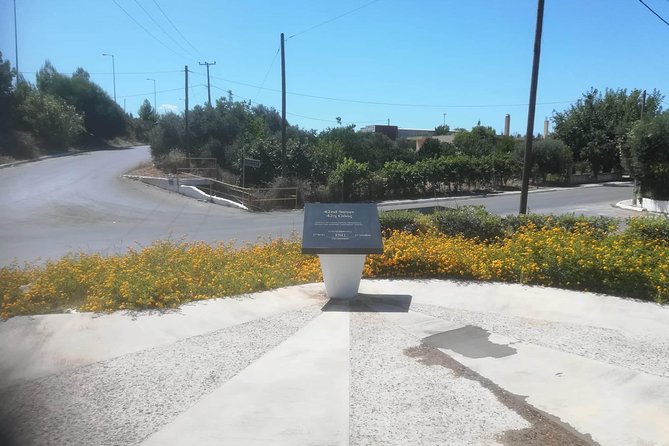
- Souda Bay War Cemetery and the 42nd Street memorial
- Hill 107, the German Military Cemetery, and what Maleme looks like
- Tavronitis Bridge and the RAF Memorial
- Galatas village memorials: Greek-New Zealand and Welch
- Alikianos area and Agia Prison Valley: a harder stop
- The USB stick take-home: why WW2 buffs will love it
- Price and value for a group of up to six
- What to expect in a full day: pace, walking, and mood
- Practical tips before you go
- Who this tour suits best
- Should you book the Battle of Crete private tour?
- FAQ
- What is the duration of the Battle of Crete private tour?
- How many people are included in a group?
- What does the tour include?
- Is admission included for the memorial sites?
- Do I need to bring anything?
- Where does pickup and drop-off happen?
- What time does the tour run?
- Are snacks and lunch included?
- What happens if the weather is bad?
Key highlights you’ll care about
- Private 2-way transfers around Chania from Souda Port, your lodging, or another convenient location
- Multiple WW2 memorial stops with free admission (cemeteries and memorials)
- Customizable focus, including interest in specific units (not just a fixed slideshow)
- Take-home materials on a USB stick: reports, books, diaries, maps, and photos
- A morning-friendly schedule with tours running between 7:00 AM and 11:00 AM
- A guide who connects local Cretan perspectives with wider Allied stories, including New Zealand ties
How this private Battle of Crete day is set up
This is a six-hour private experience, designed so you’re not bouncing around with strangers while trying to follow a battlefield story. You’ll ride in an air-conditioned vehicle and get private transportation between stops, which matters in west Chania where distances add up fast.
The biggest value here is attention. Instead of doing quick photo stops, the guide explains what you’re looking at and why it mattered in the battle. The format also gives you room to steer. If you care more about certain units, or you want more detail at one site, you can shape the day around your questions.
Logistics are straightforward. You have a mobile ticket, and you can get pickup and drop-off from Souda Port, your accommodation, or another convenient location up to 10 km/6 miles around Chania Old Town, or near the national road up to Maleme airport. If you’re staying outside those zones, the operator asks you to contact them to confirm the best pick-up point.
More private Chania tours to make your own
- Wine & Olive Oil Tour with Lunch – Semi Private Safari Tour
★ 5.0 · 156 reviews - Private Boat Trip Kissamos Balos (price per group – up to 10 people)
★ 5.0 · 143 reviews - PRIVATE Walking Tour with Lunch and Wine Tasting by a Sommelier
★ 5.0 · 113 reviews - Full-Day Private Custom Tour to Elafonisi the Pink Sand Beach
★ 5.0 · 103 reviews - Chania old town and around private tour (price per group of 6)
★ 5.0 · 85 reviews
Souda Bay War Cemetery and the 42nd Street memorial
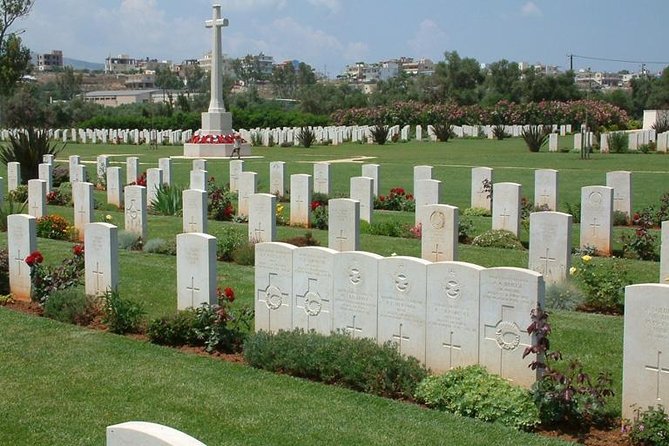
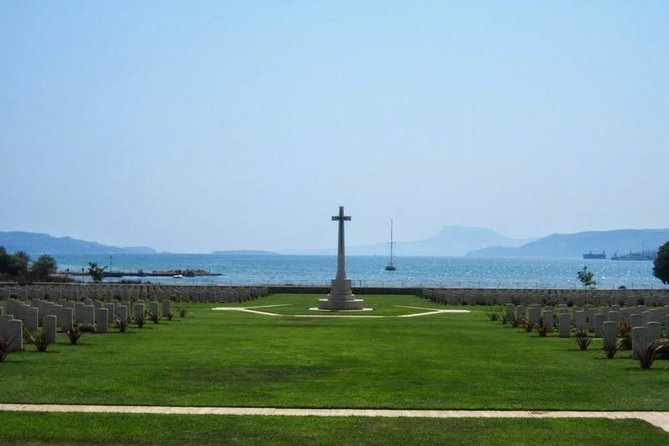
Your first stop is Souda Bay War Cemetery, the place where Allied soldiers who died in the Battle of Crete are buried. This is not a drive-by memorial. You walk around the graves, and the guide shares stories tied to the battle and the people who didn’t make it home.
Right nearby is the 42nd street memorial, and the emphasis here is on a specific moment: a bayonet charge. Even if you know the broad outline of the battle, this kind of detail puts the fighting into human scale. A charge like that isn’t an abstract concept when you’re standing in the area the memorial marks.
Practical note: the stop is listed at about one hour, and admission is free. That hour can feel both short and heavy. If you’re traveling with family members, it’s also a good moment to pause, reset, and decide whether you want more battlefield detail or more focus on individual stories for the rest of the day.
Hill 107, the German Military Cemetery, and what Maleme looks like
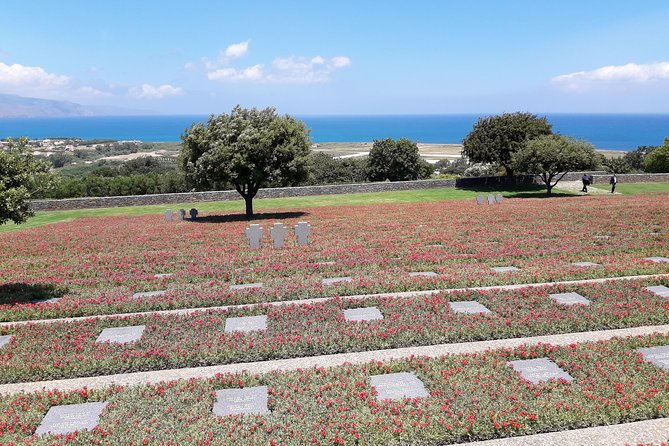
Next you visit the German Military Cemetery on the strategic hill known as hill 107, overlooking Maleme airfield. This is one of those spots where the guide’s explanation can turn the terrain into a timeline. You’re seeing the area that influenced how the battle unfolded, and the higher position helps you understand why both sides would fixate on this kind of ground.
The itinerary also includes a quick stop near Maleme airfield. One important detail: it’s described as still a military area, so access is forbidden. That means you’re relying on viewpoints and what you can legally see, which is actually a good thing. It keeps the day respectful and avoids sketchy boundaries that can cause trouble.
After that, you walk toward the allied headquarters on top of hill 107, and you get nice views of the area. Even if you’re not a “views person,” this portion helps connect the dots between what you heard at Souda Bay and what you’ll see later near bridges and village memorials.
Tavronitis Bridge and the RAF Memorial
Then you move to Tavronitis Bridge, described as playing a vital role during the Battle of Crete and a primary target for the Germans during the assault. Bridges are often where history becomes practical: movement, chokepoints, speed, and control. A guide can make that tangible by explaining why a crossing wasn’t just scenery—it was a tactical problem.
You also visit the RAF memorial dedicated to RAF pilots who fell during the battle. This adds a different angle compared to the cemetery stops. Instead of focusing on burial grounds alone, you’re connecting the fighting to the air side of the campaign through names and remembrance.
This stop is shorter at about 45 minutes. That works well here, because you’ll likely spend the time absorbing the route logic rather than lingering for long. If you like battlefield mechanics—how forces move and where they’re funneled—this is the point where the day starts clicking as a connected route.
Galatas village memorials: Greek-New Zealand and Welch
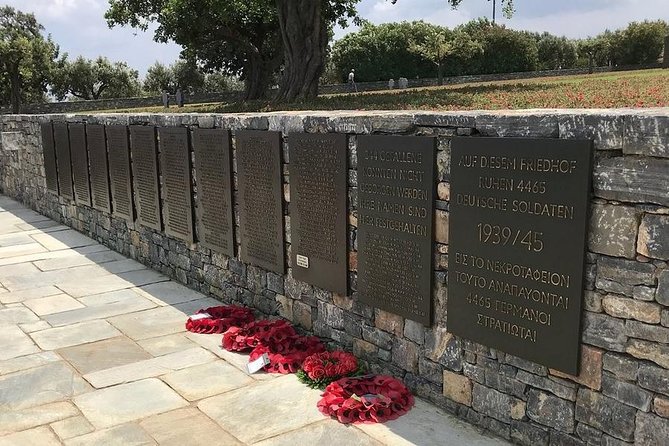
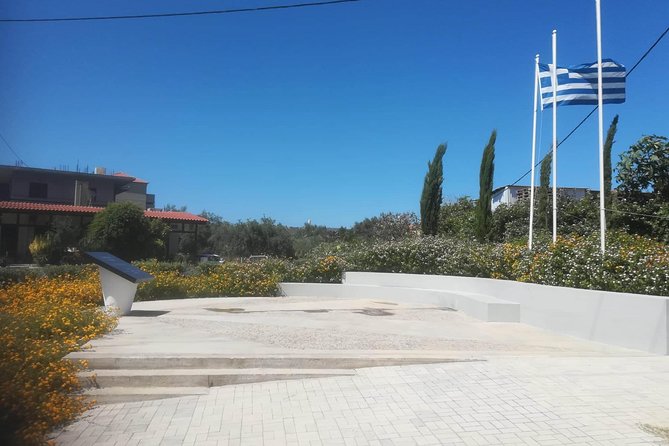
In Galatas, you visit the Greek-New Zealand memorial in the village main square. This is where the emotional impact tends to rise for people who already feel a connection to Crete through family or national ties. One review highlights how the guide paired Cretan viewpoints with New Zealand perspectives, and you can feel that approach in how the memorial is framed.
You also visit the Welch memorial in the same area. Having two memorials in one stop helps you compare how different groups are remembered in the same place. It’s also a nice break from the cemeteries, because the Galatas stop is in a village setting where the battle story overlaps with everyday life.
The itinerary gives you about one hour here, which is a comfortable amount of time if you want to read, listen, and ask questions without rushing. If your family likes small villages and you don’t mind slow travel on foot, this is one of the more satisfying portions of the route.

Alikianos area and Agia Prison Valley: a harder stop
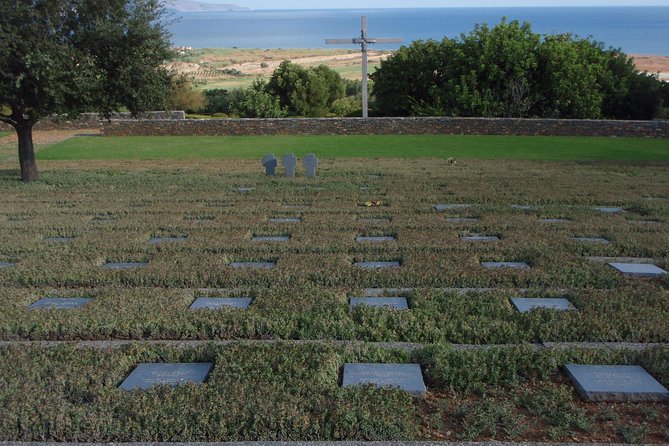
The final stop is near Alikianos, at Agia Prison Valley. This part of the day is only listed for about 20 minutes, so it’s important to treat it as a focused visit, not a quick glance.
You’ll see Agia Prison, described as having been a hospital during the battle and later a prison during the occupation, where hundreds of Greeks were executed. That’s a heavy line in the itinerary, and it doesn’t leave much room for casual sightseeing. Even though the time is short, the guide’s storytelling here likely does most of the work—explaining the location’s role and why the valley is remembered.
Because the time window is limited, you’ll get better results if you come with at least one question. For example: how did the place shift from battle-time hospital to occupation prison? A good guide can connect those dots without turning it into a lecture.
The USB stick take-home: why WW2 buffs will love it
One of the most practical and thoughtful perks is the USB stick requirement (bring one). The operator mentions you can take home reports, books, diaries, maps, and photos.
This is more than a souvenir. If you’re the kind of person who likes to research after the fact, it changes what the tour does for you. You can keep digging through the materials at your own pace, and you can share them with family who weren’t there. If you’re traveling with a WW2 enthusiast, this alone can justify the purchase because it gives you something tangible beyond photos on a phone.
Also, it’s a clever way to customize without slowing the day down. The guide can match extra documents to your interests and hand them over in a format that’s easy to revisit later.
Price and value for a group of up to six
The price is listed as $555.98 per group (up to 6) for the approx. 6-hour experience. On paper, it may look like a premium tour. In practice, the value comes from stacking several things together:
- Private guiding through multiple memorial locations
- Air-conditioned vehicle plus private transportation
- Pickup and drop-off from your chosen place within the stated area
- Several stops with free admission, so your money mostly goes to people and time rather than ticket fees
- Customizable focus, so you are not locked into a generic script
- Take-home USB materials that add real research value
If you’re traveling as a couple or family, the per-person cost drops fast when you split across a small group. Even if it doesn’t, you’re still paying for the comfort of a private route and the guide’s ability to answer your questions on the spot.
What to expect in a full day: pace, walking, and mood
This tour is designed to move efficiently. You’ll hit cemeteries and memorials across several points in west Chania, then return to your drop-off. The stops vary from 20 minutes to one hour, which keeps the rhythm moving without turning every location into the same kind of pause.
That said, the day isn’t just about driving. You’ll walk around graves and memorial areas, and you’ll go up to viewpoints like hill 107. If anyone in your group has mobility concerns, you should notify the operator in advance. The listing says most people can participate, but the terrain and walking still matter.
Mood-wise, this isn’t a casual history outing. The itinerary includes execution sites and war deaths in multiple forms—burials, memorials, and a prison valley tied to executions. That doesn’t make it unpleasant. It just means you should give yourself time to process and be present.
Practical tips before you go
Here are a few things that will make the day smoother based on the way the tour is described:
- Bring a USB stick for the take-home documents.
- Wear comfortable shoes because you’ll walk at several stops, including hills and memorial areas.
- Plan on a morning start. The opening hours show availability between 7:00 AM and 11:00 AM, Monday through Sunday.
- Bring snacks and drinks only if you want extras. Snacks are listed as 10 euro (not included), and lunch is 25 euro per person (optional).
- Expect good weather to matter. The tour requires good weather, and if it’s canceled for poor weather you’ll be offered another date or a full refund.
If you enjoy history but prefer it human and specific, you’re in the right place. The guide’s style is described as detailed yet not tiring, and the reviews emphasize how the storytelling stays engaging without turning into a long slog.
Who this tour suits best
This works especially well if:
- You want a private, guided route instead of a bus day
- Your group includes a WW2 fan, a family history connection, or anyone who appreciates the emotional side of remembrance
- You like the idea of asking questions and having the day tailored to your interests
- You want more than photos: you want documents and maps afterward via the USB stick
It may be less ideal if your group expects a lightweight, purely scenic outing. This day is built around remembrance and specific battle-related locations.
Should you book the Battle of Crete private tour?
If you care about the Battle of Crete in a grounded, place-by-place way, I’d book it. The combination of private guiding, multiple memorial sites, free admission stops, round-trip pickup, and that USB take-home research pack is hard to beat for value in a private setting.
If you hate walking, dislike emotionally heavy sites, or can’t do a morning schedule, you might want to rethink it. But if you’re ready for a serious, well-paced route with room for your questions, this is a strong choice for Chania.
FAQ
What is the duration of the Battle of Crete private tour?
The tour runs for about 6 hours.
How many people are included in a group?
It’s priced for a group of up to 6 people, and the tour is private, meaning only your group participates.
What does the tour include?
The tour includes an air-conditioned vehicle, private transportation, and guiding services for the WW2 memorials in Chania.
Is admission included for the memorial sites?
The itinerary lists admission tickets as free for each stop.
Do I need to bring anything?
You should bring a USB stick to take home reports, books, diaries, maps, and photos.
Where does pickup and drop-off happen?
Pickup and drop-off can be arranged from Souda port, your accommodation, or any other convenient location within 10 km/6 miles around Chania Old Town, or near the national road up to Maleme airport.
What time does the tour run?
The opening hours show Monday through Sunday, 7:00 AM to 11:00 AM. You’ll receive confirmation at booking.
Are snacks and lunch included?
No. Snacks are listed as 10 euro and lunch is 25 euro per person (optional).
What happens if the weather is bad?
The experience requires good weather. If it’s canceled due to poor weather, you’ll be offered a different date or a full refund.
More Private Chania Tours
- Wine & Olive Oil Tour with Lunch – Semi Private Safari Tour★ 5.0 · 156 reviews
- Private Boat Trip Kissamos Balos (price per group – up to 10 people)★ 5.0 · 143 reviews
- PRIVATE Walking Tour with Lunch and Wine Tasting by a Sommelier★ 5.0 · 113 reviews
- Full-Day Private Custom Tour to Elafonisi the Pink Sand Beach★ 5.0 · 103 reviews
- Chania old town and around private tour (price per group of 6)★ 5.0 · 85 reviews
More Tour Reviews in Chania
- From Kissamos Port: Boat Cruise to Balos Lagoon & Gramvousa★ 4.2 · 6,755 reviews
- From Chania: Full-Day Samaria Gorge Trek Excursion & Guide★ 4.6 · 3,191 reviews
- Cretan Safari – 4×4 Adventure to Preveli Beach with Lunch★ 5.0 · 780 reviews
- Elafonissi Beach Day Trip from Chania -Stop in Elos Village★ 4.5 · 744 reviews
- From Chania: Samaria Gorge with Professional Hiking Guide★ 4.6 · 720 reviews
Not sorted yet? Keep browsing things to do around Chania

Private, compared.
 ★ 5.0Wine & Olive Oil Tour with Lunch – Semi Private Safari TourFrom $181156 reviews
 ★ 5.0Private Boat Trip Kissamos Balos (price per group – up to 10 people)From $701143 reviews
 ★ 5.0PRIVATE Walking Tour with Lunch and Wine Tasting by a SommelierFrom $193113 reviews
 ★ 5.0Full-Day Private Custom Tour to Elafonisi the Pink Sand BeachFrom $441103 reviews
 ★ 5.0Chania old town and around private tour (price per group of 6)From $56785 reviews
 ★ 5.0All Inclusive Full-day Private Tour of Crete Villages from ChaniaFrom $16878 reviews
 ★ 5.0From Chania private trip to Spili-Kourtaliotiko-Kalypso beachFrom $54375 reviews
 ★ 5.0Full-Day Private Tour to Balos Lagoon and FalassarnaFrom $44170 reviews