
Reviewed · CHANIA WINE & OLIVE-OIL TASTINGS
Pottery – Honey & Olive Oil experience
If you want a Cretan day that feels hands-on, this fits. You start with a look inside a modern olive oil operation, then shift gears to honey—museum-style but ending with tasting—and finish with a ceramics workshop in Margarites plus the moving Arkadi Monastery stop. I especially like the way the day mixes production and craft, not just sightseeing, and I also appreciate the practical flow: included tickets at each stop and private transportation that keeps things easy. One heads-up: the olive oil and honey parts can feel like different speeds, so if you’re craving a deep, chatty guide at every factory, you may want to bring questions.
A big plus is the ceramics workshop. You get to make your own piece in Margarites, a pottery center shaped by nearby clay and generations of makers. It’s the kind of souvenir you’ll actually remember because you did the work. The other strong point is the honey experience, which pairs the story of bees and Cretan biodiversity with tastings that make it real.
In This Review
- Quick take
- Key Highlights You’ll Feel Right Away
- Price and Logistics: What You’re Really Paying For
- Stop 1: Paraschakis Olive Oil (Melidoni) and Why Modern Mills Matter
- A possible catch
- Stop 2: Apithano Honey Museum and Tasting in the Real Honey Lab World
- How to get the most out of this stop
- Stop 3: Margarites Ceramics Workshop—Making Something You’ll Actually Use
- What to plan for
- Stop 4: Arkadi Monastery—Venetian Church Meets 1866 Independence Drama
- Best way to enjoy it
- Transportation and Timing: How the Day Feels in Real Life
- The Driver Factor: English Speaking, But Not Necessarily a Full Tour Guide
- Value Check: When $722.47 Per Group Makes Sense
- Who This Tour Is Best For (and Who Should Skip It)
- Should You Book This Honey, Olive Oil, and Pottery Day?
- FAQ
- How long is the Pottery – Honey & Olive Oil experience?
- Where does pickup happen?
- What is the group size limit?
- What language is the experience offered in?
- Does the tour include bottled water and transportation?
- Are tickets to the stops included?
- Is lunch included?
- Do you get a tour guide?
- Is this tour suitable for most people?
- What if the weather is bad?
Quick take
This is a smart choice if you want production + craft + a historic stop in one trip without battling buses. It’s also a better fit for small groups who enjoy asking questions and moving at a steady pace rather than lingering for hours at each site.
Key Highlights You’ll Feel Right Away
- Private group up to 7 with air-conditioned transport, so you can move comfortably between four very different stops.
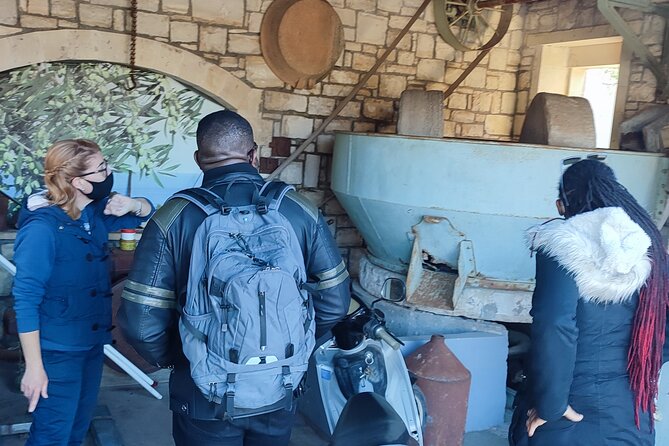
- Free olive oil factory access in multiple mills, giving you more than a single-room explanation.
- Honey museum plus lab visit and tasting, tying the story of apiθανο and bees to what you actually taste.
- Ceramics workshop in Margarites (free of charge) in one of the area’s standout pottery studios.
- Arkadi Monastery’s Venetian church + 1866 independence story, a historic anchor that gives the day emotional weight.
Thirsty work, more Chania wine and olive-oil tastings
- Wine & Olive Oil Tour with Lunch at Milia Mountain Retreat
★ 5.0 · 194 reviews - Wine & Olive Oil Tour with Lunch – Semi Private Safari Tour
★ 5.0 · 156 reviews - PRIVATE Walking Tour with Lunch and Wine Tasting by a Sommelier
★ 5.0 · 113 reviews - Chania: Milia Mountain Tour w/Lunch Olive Oil/Wine Tastings
★ 4.9 · 97 reviews - Chania: Wine, Food, and Sunset Tour with 3-Course Dinner
★ 4.9 · 77 reviews
Price and Logistics: What You’re Really Paying For
The total price is $722.47 per group (up to 7 people). That sounds like a lot until you do the math: split among a fuller group, it can land in a more reasonable per-person range than many single-admission half-day tours. What you’re paying for here is not just entry tickets. You’re paying for a smooth day built around private transportation, included bottled water, and an English-speaking driver in an air-conditioned vehicle.
Pickup is offered, but only from Heraklion city and Rethymno city (hotel/villa/cruise—your point just needs to be in those areas). If you’re basing yourself farther out, you’ll want to check whether your meeting point is eligible. The pick-up time is described as flexible, and the tour runs about 5 to 7 hours depending on timing and the day’s flow.
Also, plan around the time window: the experience operates daily from 9:00 AM to 3:30 PM (with service dates running through the posted calendar). In plain terms: you’re not doing this at sunset. You’re doing it as a proper daytime outing.
Finally, the experience requires good weather. If weather ruins it, you’ll be offered a different date or a full refund. That matters in Crete because rain doesn’t just ruin pictures—it can make transfers and outdoor parts less pleasant.
Stop 1: Paraschakis Olive Oil (Melidoni) and Why Modern Mills Matter
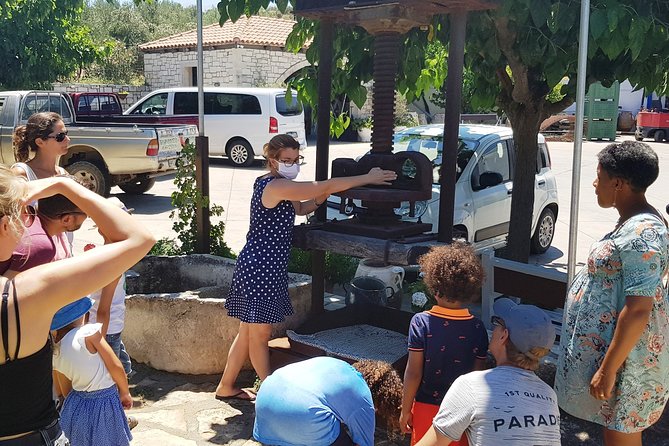
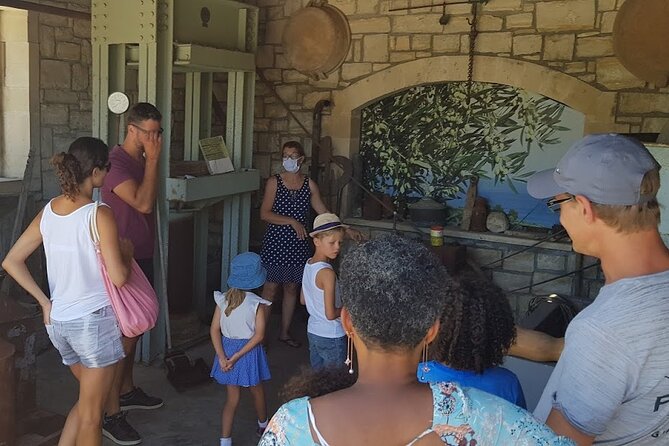
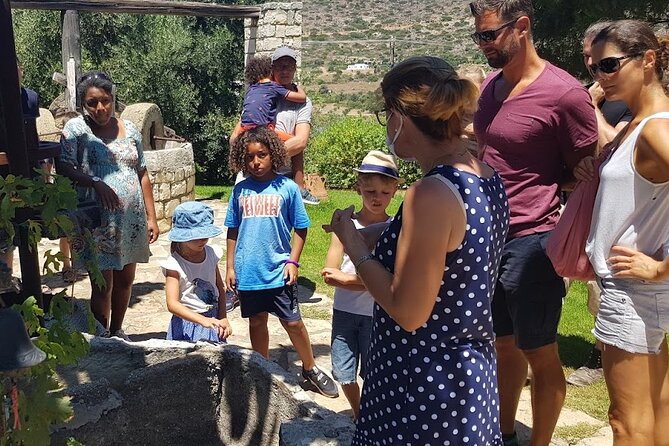
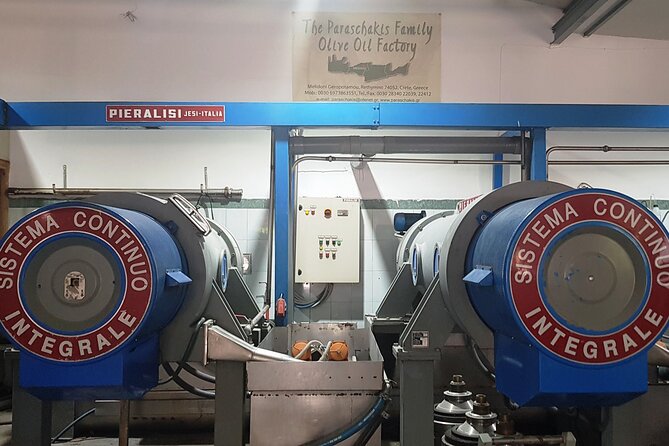
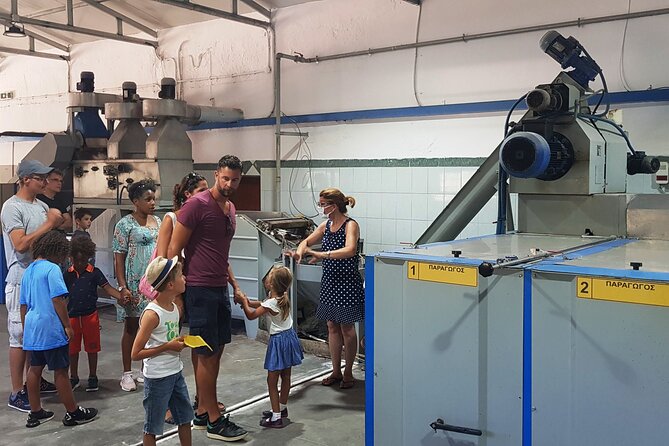
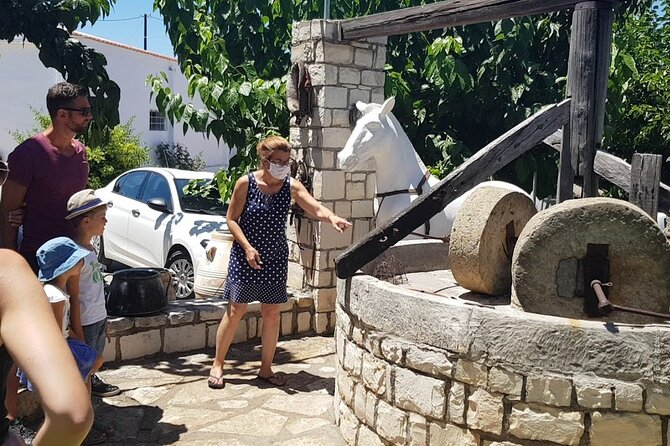
You begin at Paraschakis Olive Oil – Crete in Melidoni. This place is described as a one-of-a-kind olive oil factory with state-of-the-art facilities. The practical gift here is access: you tour for free in three different mills inside the factory.
So what does that mean for you on the ground?
First, it’s not just a quick look at a wall of photos. You’re seeing how the process is handled in a more industrial setting. Second, the emphasis on technology and strict specifications tells you what the factory cares about: consistent, high-quality results, not just tradition for show. You’ll likely get the most out of this stop if you pay attention to the workflow—how olives become oil—and ask simple questions like what affects flavor and quality.
A possible catch
One downside to know: factory tours can move at a pace that suits the operation more than your curiosity. If you’re the type who wants every step explained in depth, be ready to ask direct questions, and don’t assume the olive oil segment will feel like a long guided lecture.
Stop 2: Apithano Honey Museum and Tasting in the Real Honey Lab World
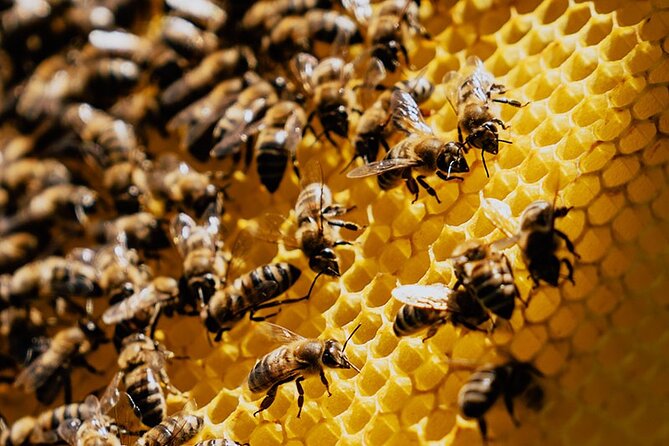
Next up is Apithano Honey Museum – Tasting & Tours. This stop is built around the history and production of honey in Crete. The experience includes a visit to the museum and also time in their lab space, where you can explore how apiθανο is made and how bees fit into the whole picture.
The honey angle here isn’t just sweet sampling—it’s about biodiversity. The honey is described as coming from selected areas of Crete with rare biodiversity and endemic vegetation, which is why the aroma and taste are meant to be distinctive. If you’ve ever wondered why one honey tastes like flowers while another tastes darker or more resin-like, this is the kind of explanation that helps you connect the flavor to the landscape of where the bees forage.
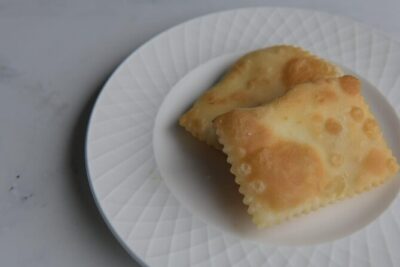
Then comes the part you can’t fake: the tasting. You get to taste after the tour, which is where the day starts clicking into memory. Honey is one of those products where the story matters, but the taste is what makes you believe it.
Hands in the dough? More Chania cooking classes and Greek nights

How to get the most out of this stop
Go with curiosity and simple questions:
- What makes this honey different from another region?
- How should you compare flavors—by aroma first, or taste first?
- Is there anything you recommend pairing it with?
If you’re sensitive to fast pacing, this stop is often easier to enjoy because you’re guided by what you see and taste, not just listening.
Stop 3: Margarites Ceramics Workshop—Making Something You’ll Actually Use
This is the “hands-on” highlight: Tsikalario cretan ceramics in pottery village Margarites. Margarites is described as Crete’s most important and well-known pottery center, and you can see why: the area has clay deposits, and locals have lived with the craft for a long time. The setting is also framed with nature—two parallel gorges nearby, with plants, aromatic herbs, and flowers—so it’s not just a room with tables.
What you do here is the real value: you can learn to make your own ceramic free of charge in a workshop session. That’s huge, because it turns your souvenir from a purchase into something you participated in.
A ceramics workshop is also a great reset in a day like this. After oil and honey (which are fascinating but pretty “informational”), pottery gives your hands a job.
What to plan for
You should expect to buy something if you fall in love with what you see. And this tour can lead to that. For many people, ceramics means “one small purchase” turns into “I need more space.” If you’re flying, keep that in mind: bring a sturdy tote or plan extra carry-room, especially if you want to take home oil and honey items too.
Stop 4: Arkadi Monastery—Venetian Church Meets 1866 Independence Drama
You close the day at Monastery of Arkadi. This isn’t a random stop. Arkadi includes one of the finest Venetian churches in Crete, and the site carries the weight of the tragic events of 1866, which are tied to Crete’s struggle for independence. In other words, this stop is where the tour stops being “about things” and becomes “about people.”
Even if your knowledge of Cretan history is basic, Arkadi works because it’s a physical place tied to a known turning point. It’s the kind of stop where you’ll feel the significance even without a long lecture—though you may still want to ask what to look for, because the architecture and commemorative elements can invite questions.
Best way to enjoy it
Take your time in the church area, then look outward. Monastery sites often reward you for noticing the bigger context around them—how the buildings relate to their setting and why this place was chosen.
Transportation and Timing: How the Day Feels in Real Life
This is a private tour, meaning only your group participates. The vehicle is air-conditioned, and you get bottled water. In practice, that makes a big difference when you’re moving between different towns and stops.
Timing is usually the hidden factor in tours like this. Each stop is listed at about 1 hour, but the day still has travel time between locations, plus time for your group to move, use restrooms, and handle shopping. So even if each attraction is “one hour,” the overall experience remains around 5 to 7 hours.
A helpful mindset: treat the tour as a sampler. You’re not going to master olive oil chemistry or honey microbiology in a single afternoon. You’re going to understand the big ideas, taste the results, and create one real craft memory.
The Driver Factor: English Speaking, But Not Necessarily a Full Tour Guide
One detail that can change your experience: included staff. The tour includes an English-speaking driver, but a dedicated tour guide is listed as not included.
That explains why people can come away with different feelings about how much narration they get. If you’re the type who loves stories and slow pacing, you’ll want to communicate what you care about. Ask for explanations on the way to each stop, and don’t wait for someone else to guess your interests.
If you’re lucky, you may also get an especially friendly and professional driver—one name that’s been shared with appreciation is Antonius. That kind of energy can make the whole day feel smoother, even if the factory explanations themselves are brief.
Value Check: When $722.47 Per Group Makes Sense
Let’s talk value without hand-waving.
For $722.47 per group up to 7, you get:
- Private transportation
- Bottled water
- English-speaking driver
- Tickets included at all main stops (as listed)
Then you also get a standout creative element: the ceramics workshop where you make your own pottery free of charge. Many activities in Europe that let you make something cost much more, especially when you add transport and multiple attractions.
So the value is strongest if:
- You have 3–7 people splitting the cost
- You want multiple included-ticket experiences in one day
- You care about making pottery, not just watching it
If you’re only a couple, the per-person cost rises fast. In that case, you’re paying more for privacy and convenience, not only for the admissions.
Who This Tour Is Best For (and Who Should Skip It)
This tour fits you best if you want a day that mixes:
- production tours (oil and honey)
- hands-on craft (ceramics)
- a major historical site (Arkadi)
It’s especially good for small groups who don’t want to plan driving, parking, and timing between separate locations.
It may be less satisfying if:
- You want a very talkative, story-heavy guide at each stop (the driver is included, while a tour guide is not)
- You’re hoping for extremely long, slow explanations at the factories
- You prefer unhurried time at one attraction over a broad sampler day
Should You Book This Honey, Olive Oil, and Pottery Day?
I’d book it if you’re after a meaty, varied Crete day: taste honey, see olive oil production, make ceramics, then end at Arkadi’s historic church with real emotional context. The ceramics part alone is a strong reason, and the private transport makes the schedule feel effortless.
I’d reconsider if you’re the kind of traveler who wants deep storytelling everywhere, not just at the most meaningful moments. If that’s you, bring questions, and use the ride time to ask for context—since the experience is driven by sites and included admissions more than by a full guide-led lecture.
FAQ
How long is the Pottery – Honey & Olive Oil experience?
It runs about 5 to 7 hours.
Where does pickup happen?
Pickup is offered only from Heraklion city and Rethymno city. Drop-offs are also from those areas.
What is the group size limit?
It’s a private tour for your group, up to 7 people.
What language is the experience offered in?
English is available.
Does the tour include bottled water and transportation?
Yes. It includes private transportation and bottled water, with an air-conditioned vehicle.
Are tickets to the stops included?
Yes, admission tickets are included for each of the listed stops.
Is lunch included?
No. Lunch isn’t included.
Do you get a tour guide?
An English-speaking driver is included, but a tour guide is listed as not included.
Is this tour suitable for most people?
Most travelers can participate.
What if the weather is bad?
This experience requires good weather. If it’s canceled due to poor weather, you’ll be offered a different date or a full refund.
More Tour Reviews in Chania
- From Kissamos Port: Boat Cruise to Balos Lagoon & Gramvousa★ 4.2 · 6,755 reviews
- From Chania: Full-Day Samaria Gorge Trek Excursion & Guide★ 4.6 · 3,191 reviews
- Cretan Safari – 4×4 Adventure to Preveli Beach with Lunch★ 5.0 · 780 reviews
- Elafonissi Beach Day Trip from Chania -Stop in Elos Village★ 4.5 · 744 reviews
- From Chania: Samaria Gorge with Professional Hiking Guide★ 4.6 · 720 reviews
Back in the Kitchen: More Classes
- Chania: Authentic Cooking Class★ 5.0 · 74 reviews
- Chania Cooking Class in Crete with rustic, delicious and homely Cretan food!★ 4.5 · 14 reviews
- Chania Sourdough Bread Class – Olive Oil Tasting★ 5.0 · 6 reviews
- Authentic and Traditional Cooking Class in Chania Crete★ 5.0 · 5 reviews
More Wine and Olive-Oil Tastings
- Crete Wine and Olive Oil Tour★ 5.0 · 272 reviews
- Wine & Olive Oil Tour with Lunch at Milia Mountain Retreat★ 5.0 · 194 reviews
- Wine & Olive Oil Tour with Lunch – Semi Private Safari Tour★ 5.0 · 156 reviews
- PRIVATE Walking Tour with Lunch and Wine Tasting by a Sommelier★ 5.0 · 113 reviews
- Chania: Milia Mountain Tour w/Lunch Olive Oil/Wine Tastings★ 4.9 · 97 reviews
Not sorted yet? Keep browsing things to do around Chania


Chania Wine & Olive-Oil Tastings, compared.
 ★ 4.6Olive Oil, Wine, Cheese & Honey Tasting TourFrom $49490 reviews
 ★ 5.0Crete Wine and Olive Oil TourFrom $145272 reviews
 ★ 5.0Wine & Olive Oil Tour with Lunch at Milia Mountain RetreatFrom $181194 reviews
 ★ 5.0Wine & Olive Oil Tour with Lunch – Semi Private Safari TourFrom $181156 reviews
 ★ 5.0PRIVATE Walking Tour with Lunch and Wine Tasting by a SommelierFrom $193113 reviews
 ★ 4.9Milia Mountain Tour w/Lunch Olive Oil/Wine TastingsFrom $17697 reviews
 ★ 4.9Wine, Food, and Sunset Tour with 3-Course DinnerFrom $16377 reviews
 ★ 5.0Wine & Olive Oil Tour with lunch at the White MountainsFrom $18171 reviews
Browse the lists this tour appears in